
Zone 2 pace and VO₂ max: the two slow numbers on a run
Neither number says how the run went. Both say how fit you are, and they only mean something across months of runs.
Most of what a run screen shows is about that run. These two are about you, and a single reading of either is close to useless. Their value is the line they draw across a season.
Zone 2 Avg Pace#
It sits at the bottom of the run’s Heart Rate Zones card, under the legend.
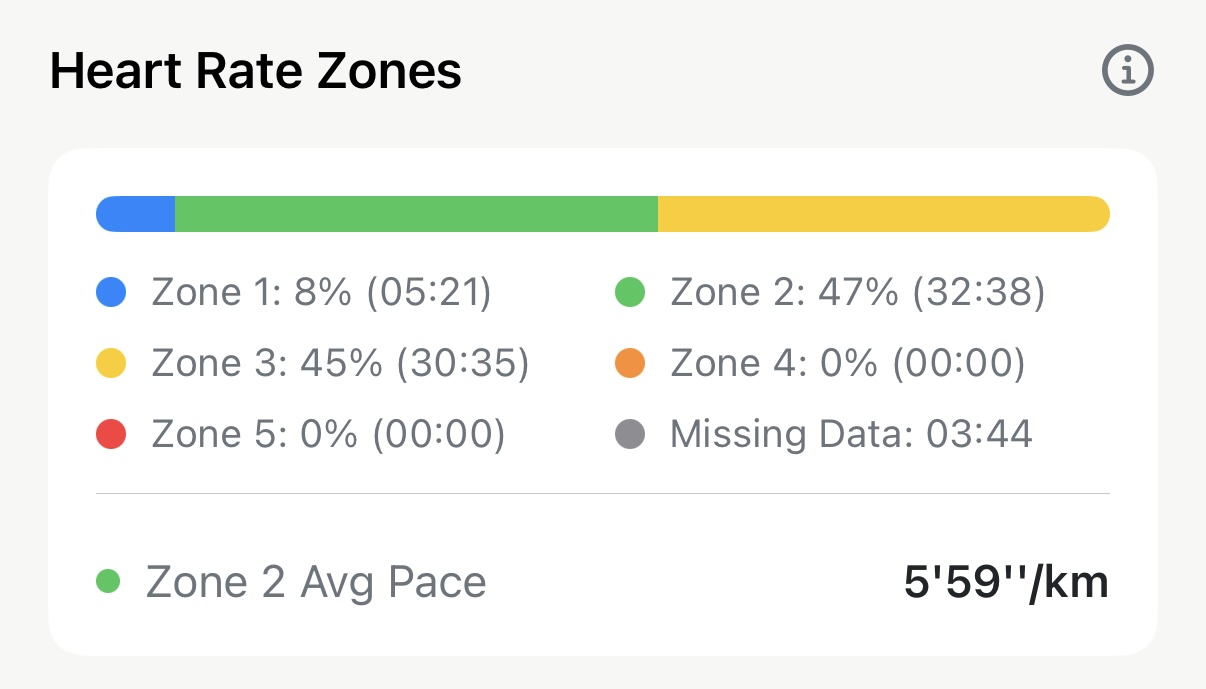
What it is. Your average pace during only the minutes your heart rate was in Zone 2, weighted by time, with pauses left out. Zone 2 is whatever your heart rate zone settings say it is. The line appears once a run has at least five minutes in Zone 2; with less than that, there’s not enough to average and the line stays away.
Why it’s worth having. It’s the answer to “what does easy running cost me right now”, taken from every run you already do, with no test to run. As your aerobic base builds, the pace at the same easy heart rate gets faster. That’s the whole idea behind running slower to get faster, and this number is how you’d see it happening. The Trends screen charts it over time, which is where it earns its keep.
How to read it.
- Compare easy runs with easy runs. On a hard session, the Zone 2 minutes are the warm-up and the recoveries, and the pace during them says nothing about your base. The number is still shown; it’s just not the one to track.
- Heat moves it. A humid August evening and a cool October morning give different Zone 2 paces at the same fitness. Read the trend over months, not the gap between two runs a week apart.
- It’s fixed at import. The number is worked out when the run comes in, from the zones you had then. Change your zones later and old runs keep their old Zone 2 pace, the same way the run type stays as it was. Reimport a run to recompute it under the new zones.
VO₂ max#
It’s one of the metric cards at the top of a run, next to Running Power.
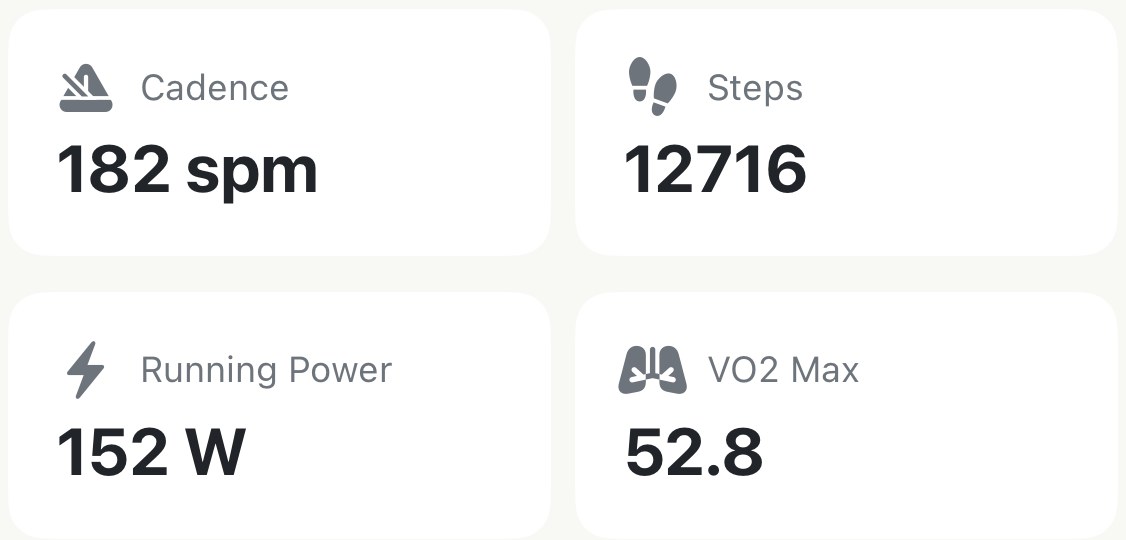
Where it comes from. Apple Watch estimates VO₂ max from how your heart rate responds to pace on outdoor runs, and writes a reading to Apple Health when it has enough to go on. Apex Run reads that estimate, not a calculation of its own, and attaches to the run the reading Apple produced between the run’s start and a few minutes after its end. If Apple wrote nothing for this run, the card doesn’t appear.
When there’s no card.
- Treadmill. Apple’s estimate needs GPS pace, so indoor runs never get one.
- A short run, or a poor signal. Apple decides when it has enough, and it’s often more than one easy 5K.
- No watch. No heart rate response to read.
How to read it. VO₂ max moves slowly and in small steps, so a change of one point between two runs is noise. The Recent Trends card on the Summary tab shows the latest reading for that reason, and the Trends chart shows the drift over months. What the number is for, and why Apple’s version is worth taking seriously, is in Bringing VO₂ max to your run.
Worth knowing#
- Both are free, and both are already filled in for your history. Zone 2 pace was worked out for every past run when the feature arrived; VO₂ max readings have been in Apple Health all along.
- They don’t agree on what “fit” means, and that’s fine. VO₂ max is a ceiling; Zone 2 pace is the cost of running well under it. A base-building block can move the second a long way while the first barely shifts.
Why it was built this way: Running slower, getting faster
Get the app
Watch your easy pace get faster without running harder.
Zone 2 Avg Pace and VO₂ max are free on every run, and both are already there for your whole history. Open an easy run from six months ago and one from this week, and the difference is the training.
↓ Download Apex Run